What a Massage Actually Does for Stress (and What It Can't)
A massage measurably lowers the physical side of stress. It does not remove the thing causing it. What the research actually shows, and when a booking is the wrong call.
11 July 2026 · 7 min read · By Kanchana Morasut, Licensed Thai massage therapist
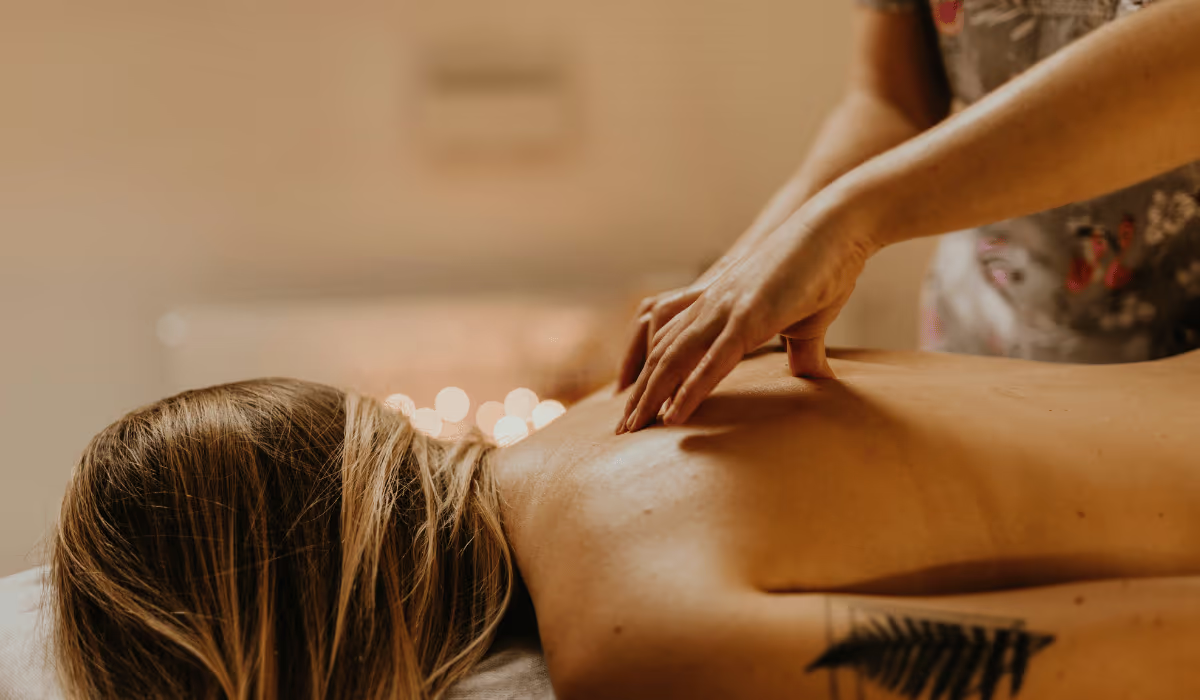
Massage for stress relief does one thing very well. It lowers the physical side of stress: the muscles let go, and the body shifts into recovery mode within minutes. What a massage cannot do is remove the thing causing the stress. That is still there when the hour ends, and no amount of pressure on your shoulders will change it.
- Ten minutes of massage is enough to switch on the body's recovery system
- Measured against simply lying down quietly, the gain is physical rather than emotional
- No help for an anxiety disorder, for depression, or for whatever is causing the stress
- Slow oil work beats heavy pressure
- At home, no trip back afterwards
Stress reaches your shoulders before it reaches your mind
Tensing up under stress is close to a reflex. The American Psychological Association describes muscle tension as the body guarding itself against injury and pain. A short burst of stress tightens the muscles, then releases them once it passes.
Chronic stress never sends the release signal. The muscles stay half braced, day after day. That is why a stressful month shows up as a stiff neck, a sore upper back, and a jaw you have been clenching without noticing. Tension headaches often trace back to the same held muscles.
A massage reaches those muscles. The deadline stays exactly where it is.
What one massage actually changes
Stress runs on the sympathetic nervous system, the branch that speeds you up. Recovery runs on the parasympathetic branch, which slows you back down. Massage acts on the second one, and the shift shows up on instruments.
Researchers at the University of Konstanz ran a randomized trial on 60 women, published in Scientific Reports (2020). Ten minutes of hands-on massage raised vagally mediated heart rate variability by about 25%, against roughly 13% in a group who just rested. That kind of heart rate variability is a standard marker of the body moving into recovery mode.
Ten minutes was enough to move the reading. The physical effect starts early, which is why people often go quiet about fifteen minutes into a session.
Part of the benefit is just stopping
The Konstanz trial included a third group who did nothing at all for ten minutes. They rested quietly in a chair. Their heart rate variability rose too, about half as much as in the two massaged groups.
The honest part of the result is what people said afterwards. Asked how stressed and how relaxed they felt, the resting group improved just as much as the massaged groups did. The paper reports no significant difference between the conditions on those ratings.
So the hands add something real, and it shows up in the body rather than in the mood score. A good part of what a massage gives you is an hour in which nobody can reach you. That hour is worth protecting. Book a treatment, then take a work call halfway through, and you lose most of what you paid for.
What a massage cannot do for stress
It cannot remove the stressor. The deadline and the money worry are both still there at 9 AM. Massage treats what stress does to your body, not what causes it.
It is not treatment for an anxiety disorder or clinical depression. Mayo Clinic Health System frames massage as a support alongside proper care. Anyone selling it as a cure is overselling it.
It also cannot repay sleep debt. One good session after three weeks of five-hour nights will feel wonderful and change very little by Thursday.
Heavier pressure does not produce more calm either. People book the deepest treatment on the menu expecting more relief, then spend two days sore.
And one session resets a bad week rather than a bad year. If stress has become a permanent feature of your life, what decides whether massage helps is repetition. Our guide to how often to get a massage covers the schedules that hold up.
Which treatment to book when the goal is calm
Slow, warm, oil-based work is the one to book. Long strokes at a steady rhythm give the nervous system something to settle into. An oil massage at home is the default choice for stress. Book 90 minutes over 60 if you have the time, because the first 20 minutes usually go on letting your guard down.
An aromatherapy massage at home adds scent to the same slow approach. Some people find the smell alone drops them out of work mode faster.
Thai massage is stretching and pressure without oil. It is very good for stiffness, though it makes for a more active hour, and a strange choice on a night when you want to be left alone. Deep tissue is built for stubborn knots in the back. It is the wrong booking when calm is the goal.
The journey home is what undoes a good massage
At a spa you finish, get dressed, walk into the street, wait for a taxi, and sit in Bangkok traffic. By the time you are through your own front door, much of the calm has drained away.
A home massage in Bangkok removes that last step. A licensed therapist arrives at your door in 20 to 45 minutes and works on your own bed. When the hour ends you are already home, and you can go straight to sleep. We work daily from 3 PM to 3 AM, which covers the evening, after the working day has finished.
Which setting suits you depends on what you want from the hour. We put the two side by side in our guide to home massage versus a spa visit.
When a home massage is not the right call
If what you want is a steam room, a sauna, a pool, and a long ritual afternoon, book a spa. We cannot bring any of that to your condo.
If your stress sits mostly in one injured shoulder, a physiotherapist will do more for you than an hour of relaxation work.
And if your flat is loud with construction, or full of people who need you, the noise will keep you alert for most of the session. Book at a quieter time instead.
Common questions
Does massage really reduce stress, or does it just feel nice?
Both, though the measurable part is physical. In a randomized trial at the University of Konstanz, ten minutes of massage raised heart rate variability by about 25%, a marker of the body's recovery system switching on. People who simply rested for ten minutes reported feeling just as relaxed, so the difference the hands make shows up in the body more than in the mood.
Which massage is best for stress and anxiety?
Slow oil work. Aromatherapy suits people who respond to scent. Deep tissue is a poor fit when calm is the goal, because heavy pressure is stimulating.
How often should I get a massage for stress?
Once or twice a month suits most people. A run of sessions does more than a single booking, and a hard stretch at work can justify every two weeks until it passes.
How long should the session be?
Book 90 minutes if stress is the reason. The first stretch of the hour usually goes on coming off alert, and a 60-minute session can end just as you settle.
Can massage replace therapy or medication for anxiety?
No. It can sit alongside proper care, and many people find it helps them sleep and hold less tension. It is not a treatment for a diagnosed condition, and no therapist should tell you it is.
Will I feel the benefit immediately?
Usually within the hour, and most strongly that evening. Some people feel heavy or a little spacey straight afterwards, which passes. Most notice it most clearly the next morning.
Book a massage at home in Bangkok
If stress has settled into your neck and shoulders, an hour of slow work in your own room is a reasonable place to start. A licensed therapist comes to your home or condo in 20 to 45 minutes, daily from 3 PM to 3 AM.